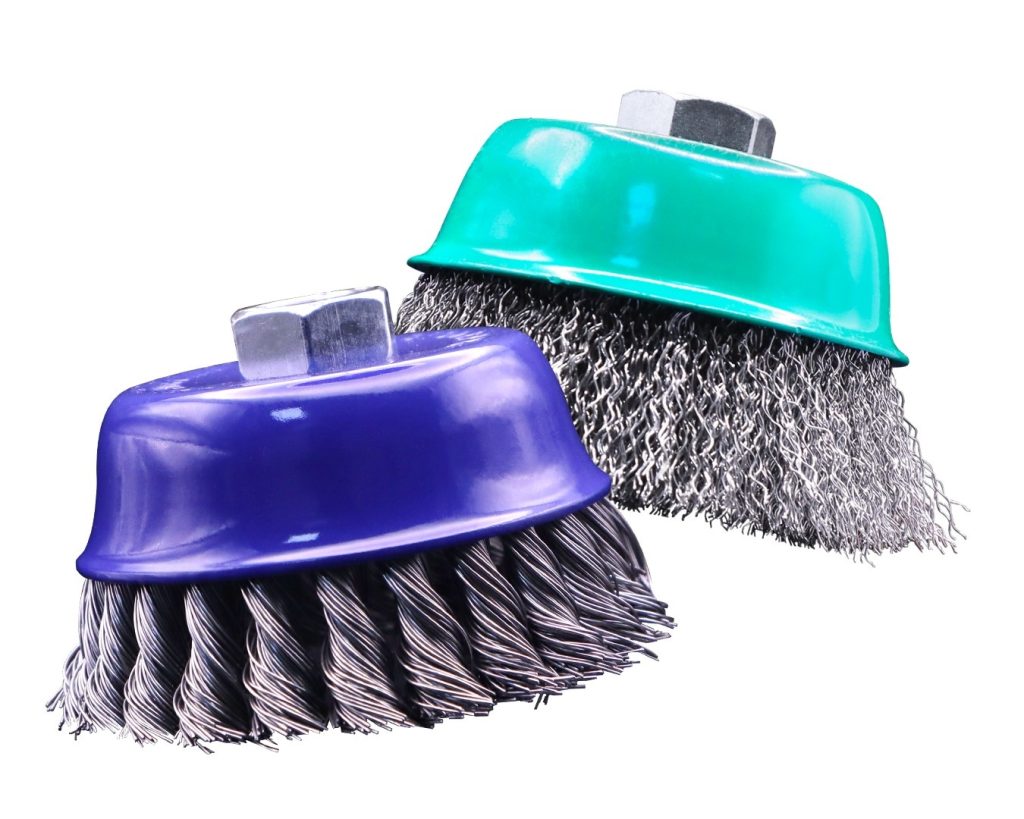
The recommended RPM (revolutions per minute) for wire cup brushes depends on their size and design. Each wire cup brush has a maximum safe operating speed to ensure safety and optimal performance. Exceeding this speed can lead to accidents or reduced tool life.
actors Affecting RPM:
- Size of the Brush: Smaller brushes can typically operate at higher RPMs than larger brushes.
- Wire Configuration: Twisted knot brushes generally have lower maximum RPMs than crimped wire brushes due to their more aggressive design.
- Power Tool Compatibility: The RPM rating of the tool (e.g., angle grinder, drill) should match the brush’s recommended speed.
USES OF A WIRE CUP BRUSH:
- Rust Removal: Effectively removes rust and corrosion from metal surfaces.
- Paint Stripping: Cleans off old paint or coatings without damaging the base material.
- Deburring: Smoothens sharp edges or burrs on metal after cutting or machining.
- Cleaning Surfaces: Removes welding slag, dirt, and scale for a clean and polished finish.
- Surface Preparation: Prepares surfaces for welding, painting, or coating by creating a clean base.
- Polishing: Can provide a brushed metal finish for aesthetic purposes.
SAFETY TIPS:
- Always check the manufacturer’s label on the wire cup brush for the maximum RPM.
- Do not exceed the stated maximum RPM to avoid accidents or brush failure.
- Use proper personal protective equipment (PPE) such as goggles, gloves, and face shields when working with wire cup brushes.