HOW TO USE IT:
- Prepare and Inspect the Equipment
- Ensure safety: Wear protective gear (gloves, safety glasses, etc.).
- Check the argon cylinder: Make sure the cylinder is upright and secured to prevent it from tipping over.
- Inspect the regulator: Before connecting, visually check the regulator for any damage or debris in the connections.
2.Attach the Regulator to the Argon Tank
- Remove the cylinder cap: Open the protective cap on the argon tank’s valve.
- Clean the valve: Quickly open and close the cylinder valve to remove any dust or
- debris (this process is called “cracking” the valve). Ensure you face away from the valve while doing this to avoid any particles hitting your face.
- Connect the regulator: Screw the regulator onto the tank valve. Hand-tighten it, and then use a wrench to secure it, but do not overtighten.
3. Turn on the Argon Cylinder
- Slowly open the tank valve: Turn the cylinder valve counterclockwise slowly to release argon gas into the regulator.
- Check the pressure gauge: The pressure gauge on the regulator should now display the pressure inside the tank (typically in PSI or BAR).
4. Set the Flow Rate
- Adjust the flow meter: Use the adjustment knob on the regulator to set the desired flow rate. Most welding processes, like TIG or MIG welding, require a flow rate between **10-25 cubic feet per hour (CFH) or 5-15 litters per minute (LPM).
- Check the flow gauge: The flow gauge will indicate the gas flow rate. Adjust it until the desired level is reached.
5. Start Welding
- Once the flow is properly set, begin welding. The argon will flow continuously, providing the shielding gas necessary for a clean weld.
6. Turn Off and Disconnect After welding is complete:
- Close the cylinder valve: Turn the cylinder valve clockwise to stop the gas flow.
- Release pressure: Turn the regulator adjustment knob until the pressure on both the tank and flow gauges drops to zero.
- Disconnect the regulator: Use a wrench to carefully remove the regulator from the tank.
- Store properly: Replace the protective cap on the argon cylinder and store it in a secure, upright position.
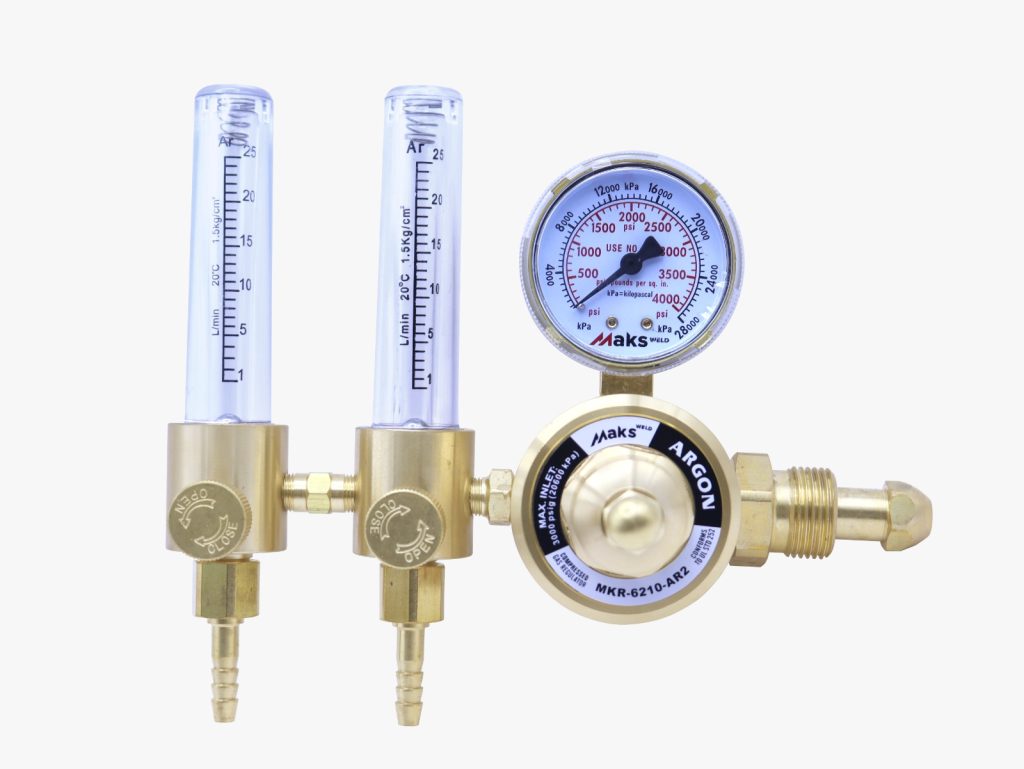
- Calibrated for Argon
- Pressure gauge for easy reading
- Dual Flowmeter is back pressure compensated to ensure accurate readings when
- line restrictions are present
- External safety pressure relief design
The argon regulator ensures that the argon gas is delivered at a consistent and precise flow rate, which is critical for maintaining weld quality. It has the following components:
- Pressure gauge – Shows the pressure inside the argon tank.
- Dual Flow meter – Measures the flow rate of the gas, usually in litters per minute (LPM) or cubic feet per hour (CFH).
- Adjustment knob – Allows the user to regulate the flow of gas.
- Inlet and outlet ports – Connect to the gas tank and the welding machine.
Using an argon regulator properly is essential for ensuring a steady and safe flow of gas during welding or other processes. Here’s a step-by-step guide on.