GUIDELINES
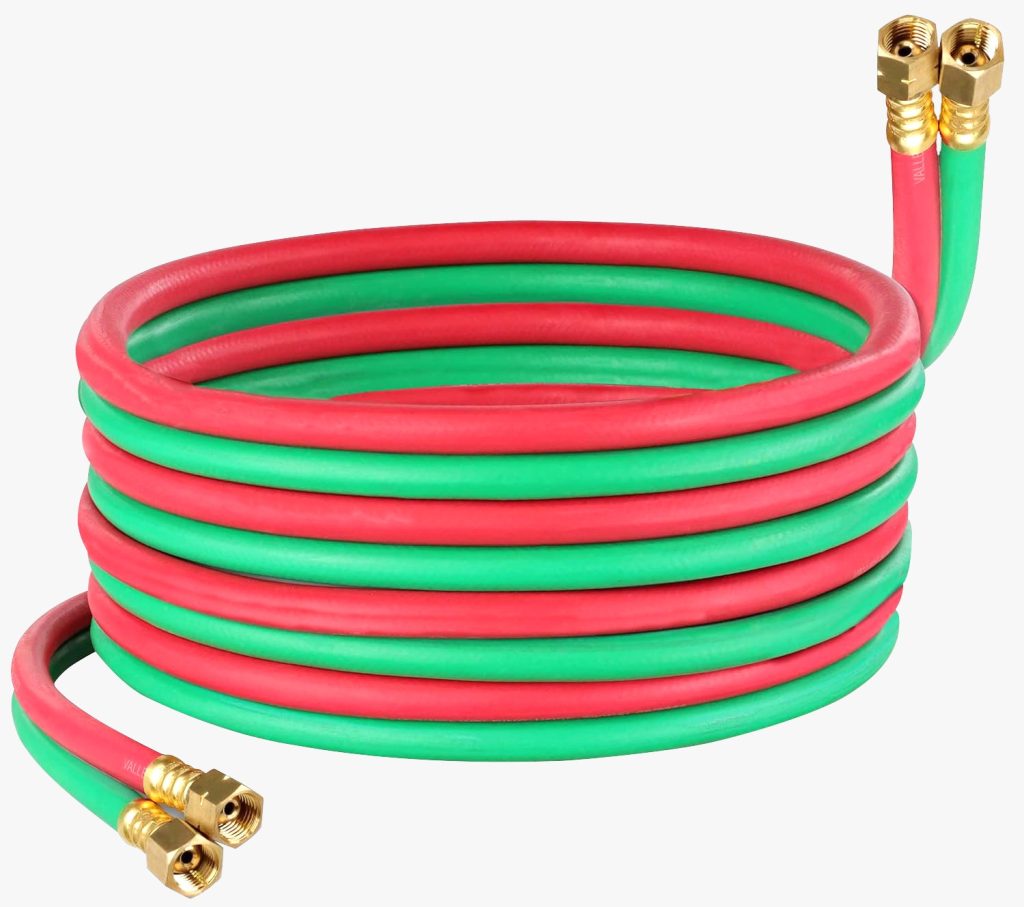
- Identify Hose: Ensure you have the correct hose designed for use with both oxygen and acetylene. These hoses are typically color-coded, with red for acetylene and green for oxygen. The colors help prevent mixing up the gases.
- Setup: Connect one end of the acetylene hose to the acetylene cylinder and the other end to the appropri-ate inlet on the welding or cutting torch. Repeat this process for the oxygen hose, connecting it to the oxygen cylinder and torch inlet
- Secure Connections: Ensure all connections are tightened securely to prevent gas leaks. Use appropriate fittings and adapters as needed.
- Regulation: Adjust the flow regulators on the gas cylinders to the desired pressure for both oxygen and acetylene. The correct pressure settings depend on the specific welding or cutting task.
- Ignition: Open the valves on the cylinders slowly and carefully to allow gas to flow into the hoses. Use a spark lighter or other ignition source to ignite the acetylene gas at the torch tip.
- Adjust Flames: Adjust the valves on the torch handle to achieve the desired flame characteristics for welding or cutting. The oxygen and acetylene gases mix at the torch tip, creating a controlled flame.
- Welding/Cutting: With the torch properly adjusted, you can now proceed with welding or cutting. Move the torch along the workpiece at the appropriate speed and angle to achieve the desired results.
- Safety: Always follow safety precautions when working with oxy-acetylene equipment, including proper ventilation, wearing appropriate protective gear, and keeping flammable materials away from the work area.
- Shutdown: After completing your welding or cutting task, close the valves on the cylinders to stop the flow of gas. Bleed any remaining gas from the hoses by opening the torch valves and allowing the gas to escape.
- Storage: Store the hoses and equipment in a safe and secure location, away from heat sources and potential damage.
Following these steps will help you safely and effectively use oxygen acetylene hoses for welding and cutting operations.