HANDLING & USAGE
Compliance with EN ISO3821 standard.
| Norminal I.D. |
Norminal O.D. |
Reinforcement | Working pressure |
Burst Pressure |
Max Length(M) |
|---|---|---|---|---|---|
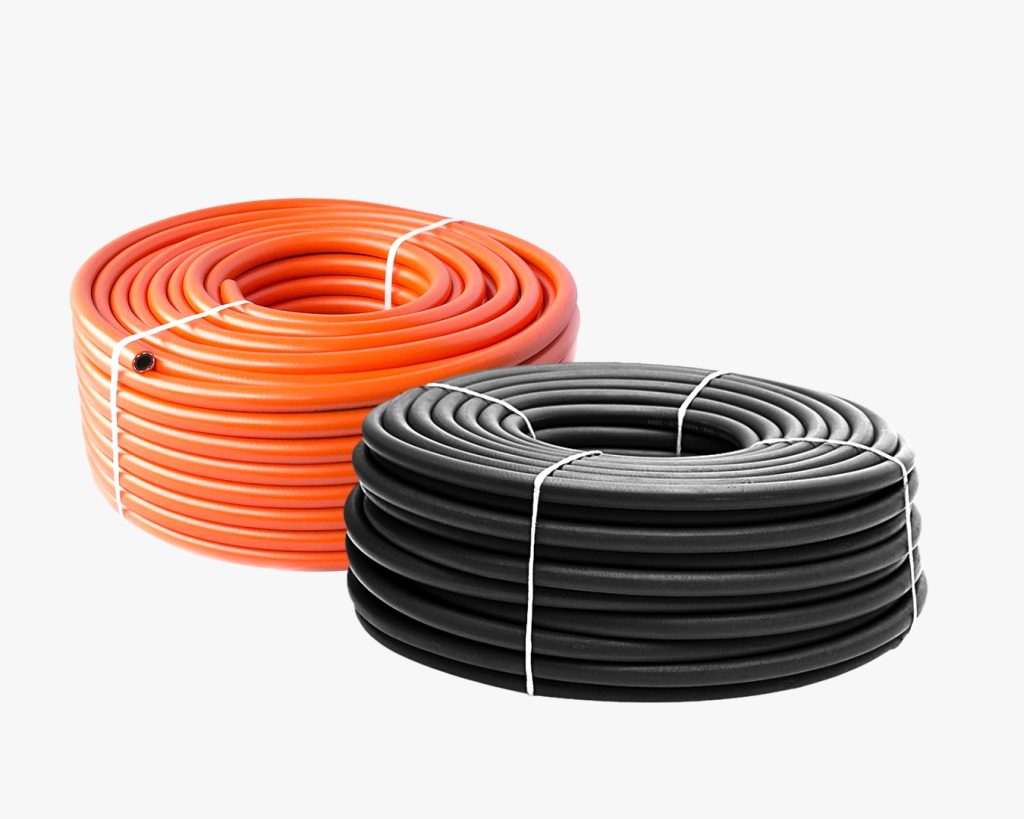
| 1/4″(6.3mm) | 13mm | Spiral Yarns | 20 Bar | 60 Bar | 120M |
GUIDELINES
Using argon hoses is relatively straightforward, especially in welding applications. Here’s a basic guide:
1. Setup: Connect one end of the argon hose to the argon gas cylinder using the appropriate fittings. Ensure that the fittings are securely tightened to prevent leaks.
2. Routing: Route the hose from the gas cylinder to the welding machine or the gas control unit.
3. Connection: Connect the other end of the hose to the inlet port on the welding machine or gas control unit. Again, make sure the connection is secure to prevent gas leaks.
4. Regulation: Adjust the flow rate of argon gas using the regulator on the gas cylinder or the gas control unit. The appropriate flow rate depends on the specific welding process and materials being used.
5. Operation: Once the argon hose is connected and the gas flow is regulated, you can start the welding process. The argon gas will flow through the hose to the welding torch, where it serves to shield the weld pool from atmospheric contamination.
6. Safety: Always follow safety guidelines when working with argon gas, including proper ventilation and avoiding exposure to high concentrations of gas.
7. Maintenance: Regularly inspect the argon hose for signs of wear or damage, and replace it if necessary to ensure safe operation.