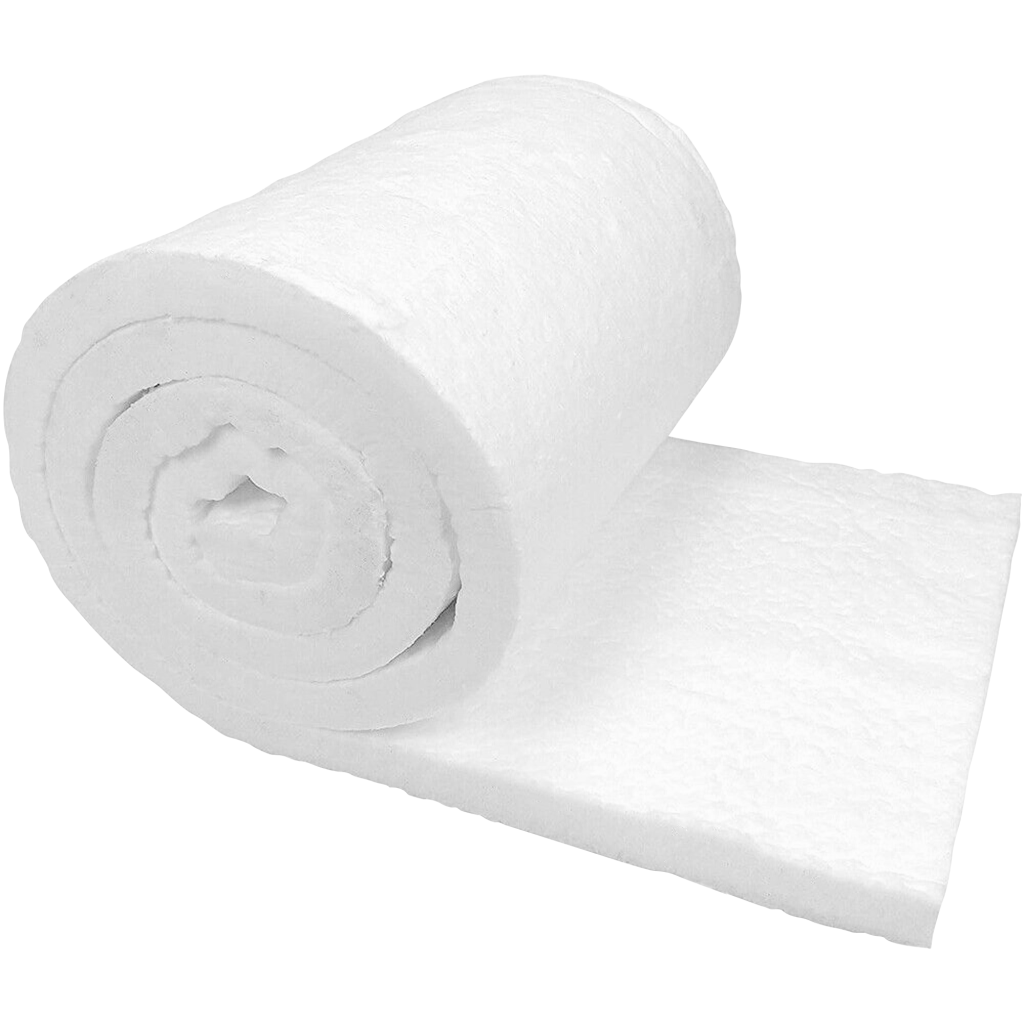
Applications:
- Furnace and kiln insulation
- Boiler and duct insulation
- Expansion joint insulation
- Fire protection barriers
- High-temperature gaskets
- Heat shields and baffles
Handling and Installation:
- Cutting: Can be easily cut with a sharp knife or scissors.
- Installation: Can be layered or wrapped around equipment for optimal insulation.
- Safety: Wear gloves, masks, and protective clothing to avoid skin irritation from fibers.
Packaging:
- Rolled and packed in plastic wrapping for protection.
- Dimensions per roll: 1 m (width) x 3 mm (thickness) x 30 m (length).
Storage:
- Store in a dry, cool place away from moisture and direct sunlight.
How to Use Ceramic Fiber Blanket
Ceramic fiber blankets are lightweight, flexible, and highly heat-resistant materials used for insulation, fire protection, and heat shielding. Below is a guide on how to use them properly.
- Safety Precautions
Before handling ceramic fiber blankets, ensure safety measures to avoid skin irritation and inhalation of fibers:
- Wear protective gear: Gloves, safety glasses, and a dust mask or respirator. Work in a ventilated area: Minimize airborne fibers.
- Use water or a sealing spray: Lightly misting the blanket with water reduces fiber release.
2. Cutting and Shaping
- Use a sharp utility knife or scissors to cut the blanket to the required size.
- For precise fitting, measure the area first and mark the blanket before cutting.
- Layering is possible if additional insulation thickness is required.
3. Installation Methods
A. Furnace, Kiln, and Boiler Insulation
- Wrap or line the interior of furnaces, kilns, or boilers to enhance thermal efficiency.
- Secure using metal pins, wire mesh, or high-temperature adhesives to hold it in place.
B. Welding and Fire Protection
- Use as a welding blanket to protect surrounding areas from sparks and heat.
- Drape over equipment or hang as a fire barrier for added protection.
C. Pipe and Duct Insulation
- Wrap around high-temperature pipes and ducts to prevent heat loss.
- Secure with high-temperature wire, banding, or heat-resistant adhesive.
D. Expansion Joints and Seals
- Use in industrial applications where high-temperature expansion joints are needed.
- Combine with high-temp coatings for additional durability.
4. Securing the Blanket
Depending on the application, secure the blanket with:
- Metal fasteners or wire for high-heat environments.
- High-temperature adhesives for a permanent bond.
- Stainless steel mesh or clips for easy removal and replacement.
5. Maintenance and Handling
- Regularly check for wear and tear in high-heat applications.
- Replace damaged or worn-out sections to maintain insulation efficiency.
- Minimize fiber release by applying a high-temperature sealant if needed.